Lao Baci Ceremony: Meaning, Etiquette & What Travelers Should Expect
· Terra Lao Adventure
Learn what the Lao Baci ceremony means, what the white strings symbolize, and how travelers can join respectfully in Laos.
Why the Baci ceremony matters to travelers in Laos
Many visitors come to Laos for limestone mountains, river adventures, and the slow rhythm of places like Vang Vieng. But some of the most memorable moments in the country are not adrenaline-based at all. They happen when you are welcomed into a room, asked to sit close, and gently receive a white cotton string around your wrist. That moment is often part of a Baci ceremony, also called Sou Khuan, one of the most meaningful blessing traditions in Lao culture.
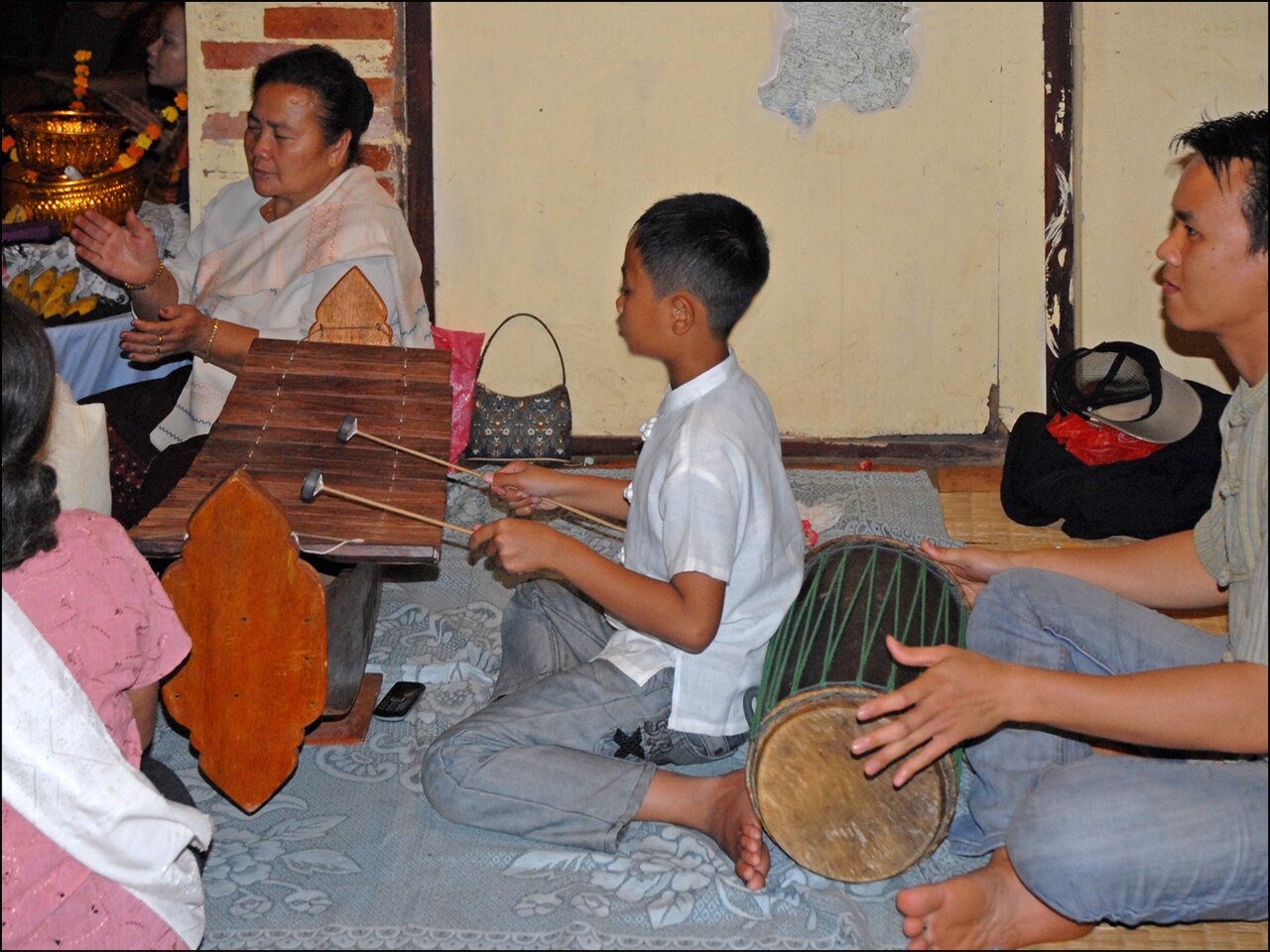
For travelers, understanding Baci changes the experience completely. Instead of seeing it as a quick cultural performance, you begin to understand it as a ritual connected to well-being, transition, protection, and community. It can happen at weddings, family milestones, departures, arrivals, house blessings, or ceremonial welcomes. In some tourism contexts, visitors may be invited to join a simplified version of the tradition as a gesture of hospitality.
If you travel with Terra Lao Adventure, there is a good chance you will be looking for deeper connection as well as beautiful landscapes. Learning the meaning behind a Baci ceremony helps you approach that connection with more respect and a lot less awkwardness.
What is a Lao Baci or Sou Khuan ceremony?
At its core, Baci is a blessing and soul-calling ceremony. In Lao belief, a person is connected to multiple spiritual essences or life forces often described through the idea of khuan. When someone experiences a major life event, a journey, a period of illness, a celebration, or an important transition, a Baci ceremony may be held to call those life forces back into harmony and wish the person strength, luck, health, and peace.
That is why Baci is often linked with moments of change. A traveler may encounter it during a welcome, a farewell, a community visit, a family celebration, or a cultural exchange. The ritual is not only about words. It is about intention, social bonds, and collective goodwill.
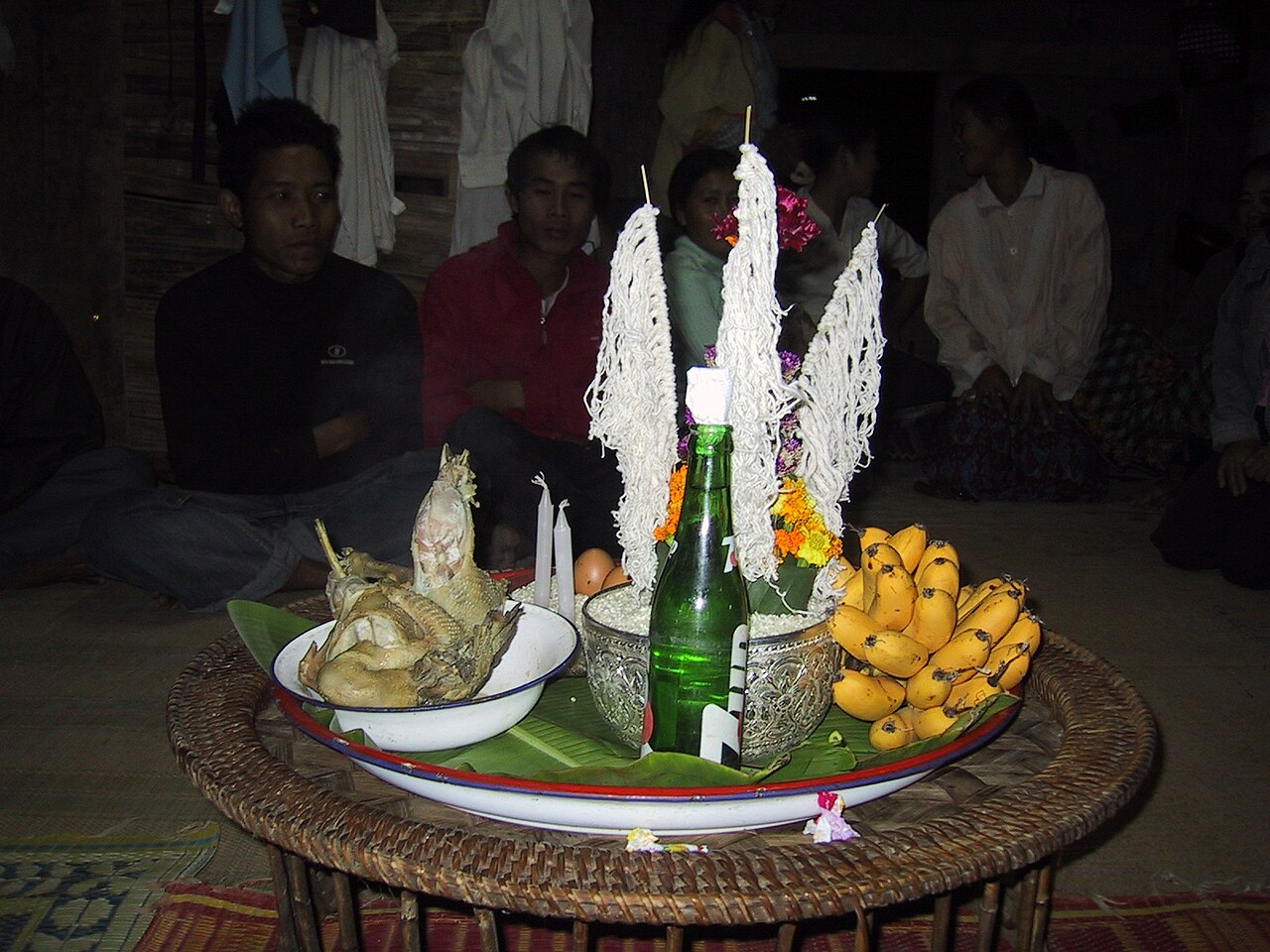
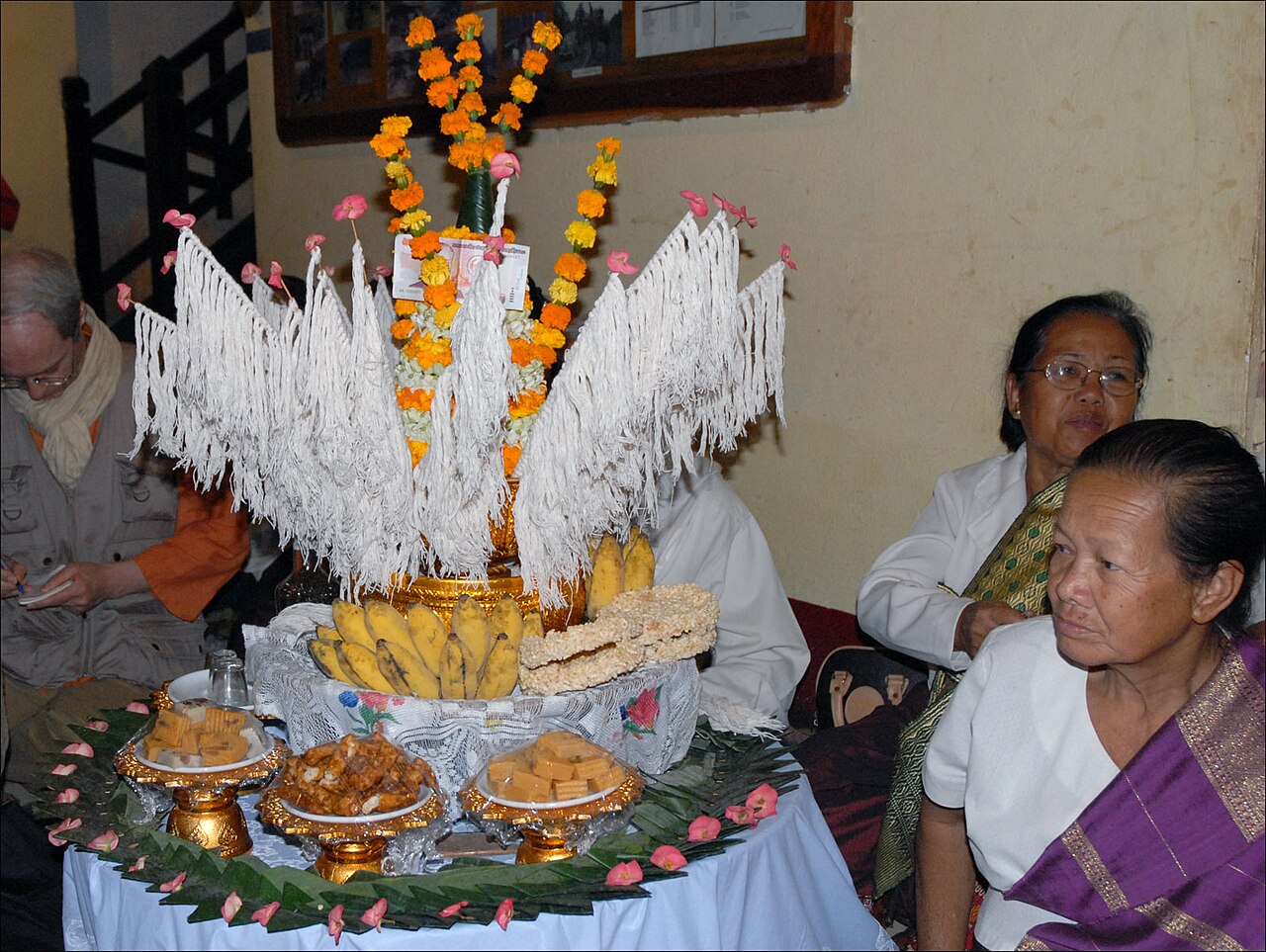
One of the most recognizable elements is the white cotton string tied around the wrist. Those strings are not random decoration. They are part of the blessing itself. Receiving one means accepting good wishes from the people around you.
What the white strings symbolize
When people talk about Baci after their first experience, the strings are usually what they remember most. In Laos, those white strings are commonly associated with blessings, protection, luck, and the wish that your spirit stays whole and steady. Their power is symbolic and relational: they represent what the community is offering you through the ceremony.
Travelers sometimes make the mistake of treating the strings like a souvenir bracelet that can be removed immediately for comfort or for a photo. A more respectful approach is to understand that, for many participants, the string matters because of what it represents. Even when the ceremony is shared with guests, the meaning is not reduced to decoration.
You do not need to perform perfect ritual knowledge to be respectful. You simply need to recognize that the gesture is sincere. If someone ties a string on your wrist during a Baci, they are extending care, blessing, and welcome.
When travelers might encounter a Baci ceremony
Not every visitor to Laos will see a Baci, but it is not rare either. You may encounter one in settings such as:
- a family celebration or wedding
- a house blessing or important life milestone
- a farewell or welcome gathering
- a community-based cultural visit
- a formal greeting for guests
In tourism settings, the ceremony may be shorter and more accessible than in a private family context, but the respectful basics remain the same. Even if the version you see is adapted for guests, it is best to approach it as a real act of hospitality, not a staged prop.
For Vang Vieng travelers, this matters because many itineraries focus heavily on tubing, kayaking, viewpoints, caves, and off-road adventure. Those experiences are fantastic, but culture is often what turns a trip into something memorable. Understanding Baci helps balance the adventure side of Laos with the human side.
Basic etiquette: how to join respectfully
If you are invited to attend a Baci ceremony, do not panic. You are not expected to become an expert overnight. A calm and respectful attitude goes a long way.
Here are the most important etiquette basics:
- Dress modestly if possible, especially in a family or village setting.
- Follow the host's lead instead of trying to direct the moment.
- Sit respectfully and avoid sprawling or behaving too casually.
- Keep your phone use to a minimum.
- Accept the white string graciously.
- Smile, stay present, and let the ceremony unfold at its own pace.
You do not need to overperform seriousness, but you should avoid treating the ritual as entertainment. If you are unsure whether to speak, move, or take photos, wait and observe first.
Is photography okay?
This depends on the context. In some guest-facing cultural settings, photos are normal. In more personal or family-centered settings, constant photography can feel intrusive. A good rule is simple: ask, or follow the cues of your host and guide.
If photography is acceptable, try to photograph the scene respectfully rather than interrupting it. Avoid turning a deeply human moment into a content grab. Wide, quiet documentary-style images are usually better than jumping into the middle of the ceremony to stage close-ups.
How long should you keep the strings on?
Visitors often wonder what to do after the ceremony ends. Practices vary, and there is not always one universal answer that applies in every household or region. Because of that, the safest approach is not to make grand claims about an exact required number of hours or days.
Instead, follow a respectful principle: do not rush to remove the strings immediately in front of the people who tied them. Keeping them on for a while shows appreciation for the blessing and the intention behind it. If a local host or guide offers specific advice in context, that guidance should take priority.
Why Baci fits the spirit of Laos so well
One reason travelers remember Laos so fondly is that welcome here often feels personal rather than transactional. Baci reflects that. It is generous, symbolic, and rooted in relationship. The ceremony expresses the idea that well-being is something shared and reinforced by community, not only held by the individual.
That is also why it resonates so strongly with travelers who slow down enough to notice it. A Baci ceremony may last only a short time, but it can reframe the way you see the country. Instead of moving from one activity to the next, you begin to understand how hospitality, blessing, and social connection shape everyday life in Laos.
How to explain Baci to someone after your trip
If someone asks what Baci was like, the easiest answer is this: it is a traditional Lao blessing ceremony where people tie white strings around your wrist and wish you luck, harmony, and well-being. But that short answer misses the feeling.
The fuller answer is that Baci represents a way of welcoming people into a circle of care. It can mark transitions, honor presence, and bring a sense of calm to important moments. For many travelers, it becomes one of the most moving cultural experiences of the trip precisely because it is quiet, generous, and deeply human.
Final thoughts for Vang Vieng and Laos travelers
Adventure may be what brings many travelers to Vang Vieng, but culture is often what stays with them afterward. If you have the opportunity to attend a Baci ceremony during your time in Laos, treat it as more than a box to tick. Listen, observe, and accept the gesture with genuine appreciation.
The ritual does not ask you to be perfect. It asks you to be present. And in a destination where so many unforgettable moments happen outdoors, Baci is a reminder that some of the most meaningful travel experiences happen when people simply welcome you in.
If your Laos itinerary mixes outdoor adventure with cultural discovery, that balance is exactly where a trip starts to feel richer. The cliffs, rivers, and trails may get you here, but ceremonies like Baci help you understand the spirit of the place.