Electric vs Gas Enduro in Laos: Why We Ride Kayo EC2i in Vang Vieng
· Terra Lao Adventure
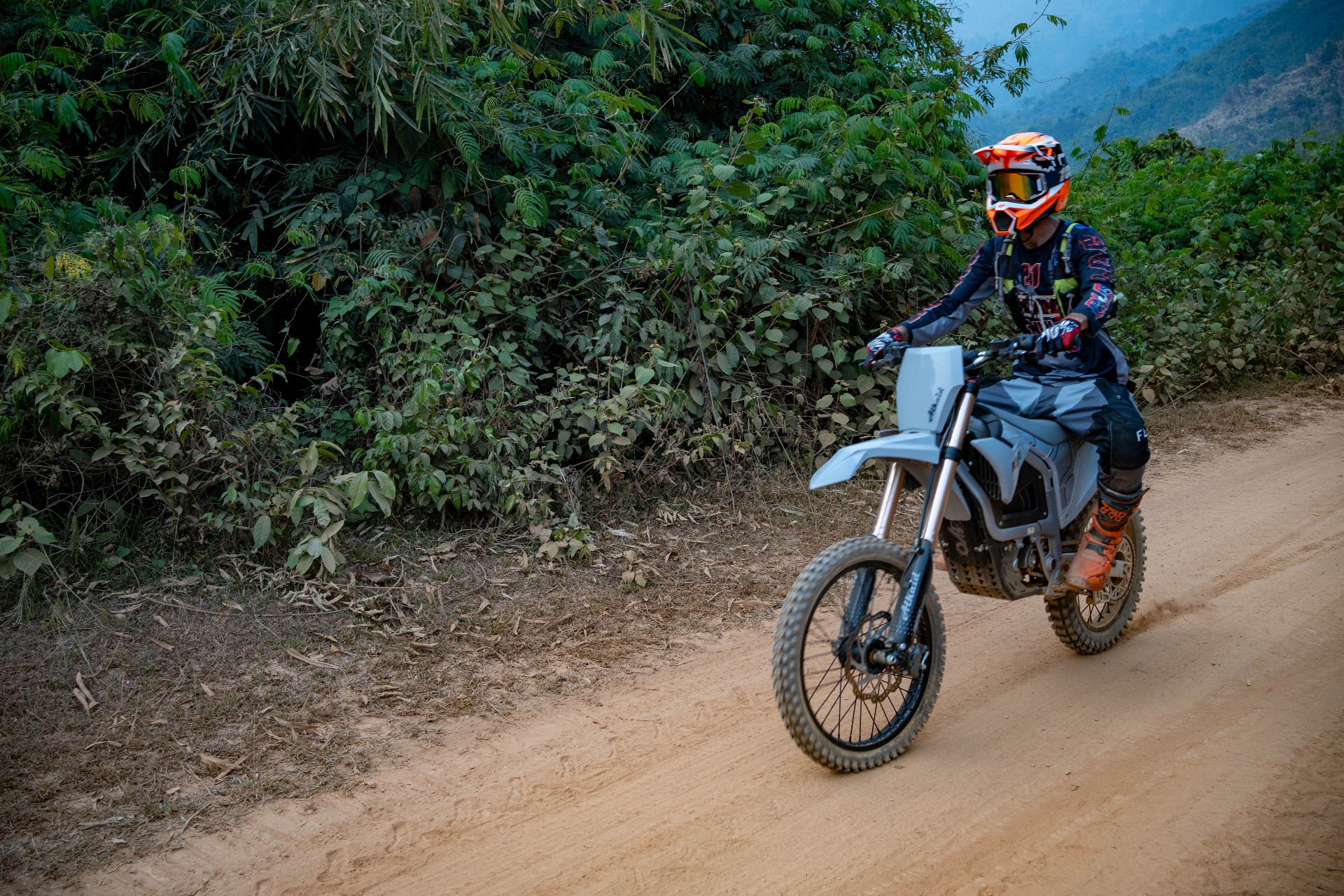
Why electric enduro on Kayo EC2i beats gas dirt bikes for tours in Vang Vieng, Laos: silent, no license needed, beginner-friendly, eco.
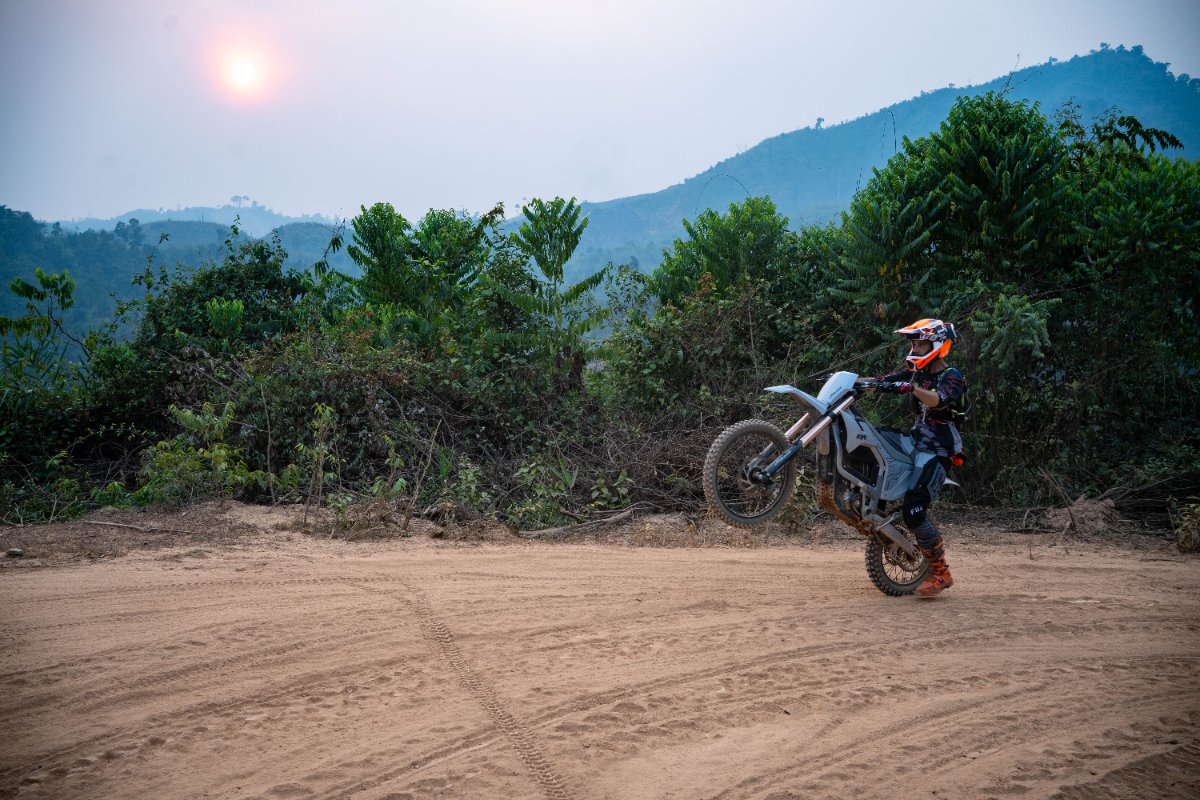
When most people picture an enduro tour in Southeast Asia, they imagine the roar of a 250cc gas bike, the smell of two-stroke smoke, and a long argument with a rental shop about your missing motorcycle license. We thought the same way for years. Then we put a group of total beginners on Kayo EC2i electric enduro bikes and watched them ride trails that gas-bike beginners would never have attempted. The silence let us roll past water buffalo without spooking them. Nobody stalled. Nobody asked about a license. We were never going back.
This post is the case for electric enduro in Laos — specifically, for guided off-road tours around Vang Vieng. We will compare it directly to gas, address the range and charging worries that always come up, and explain why we now run our entire fleet electric at Terra Lao Adventure.
What is electric enduro, exactly?
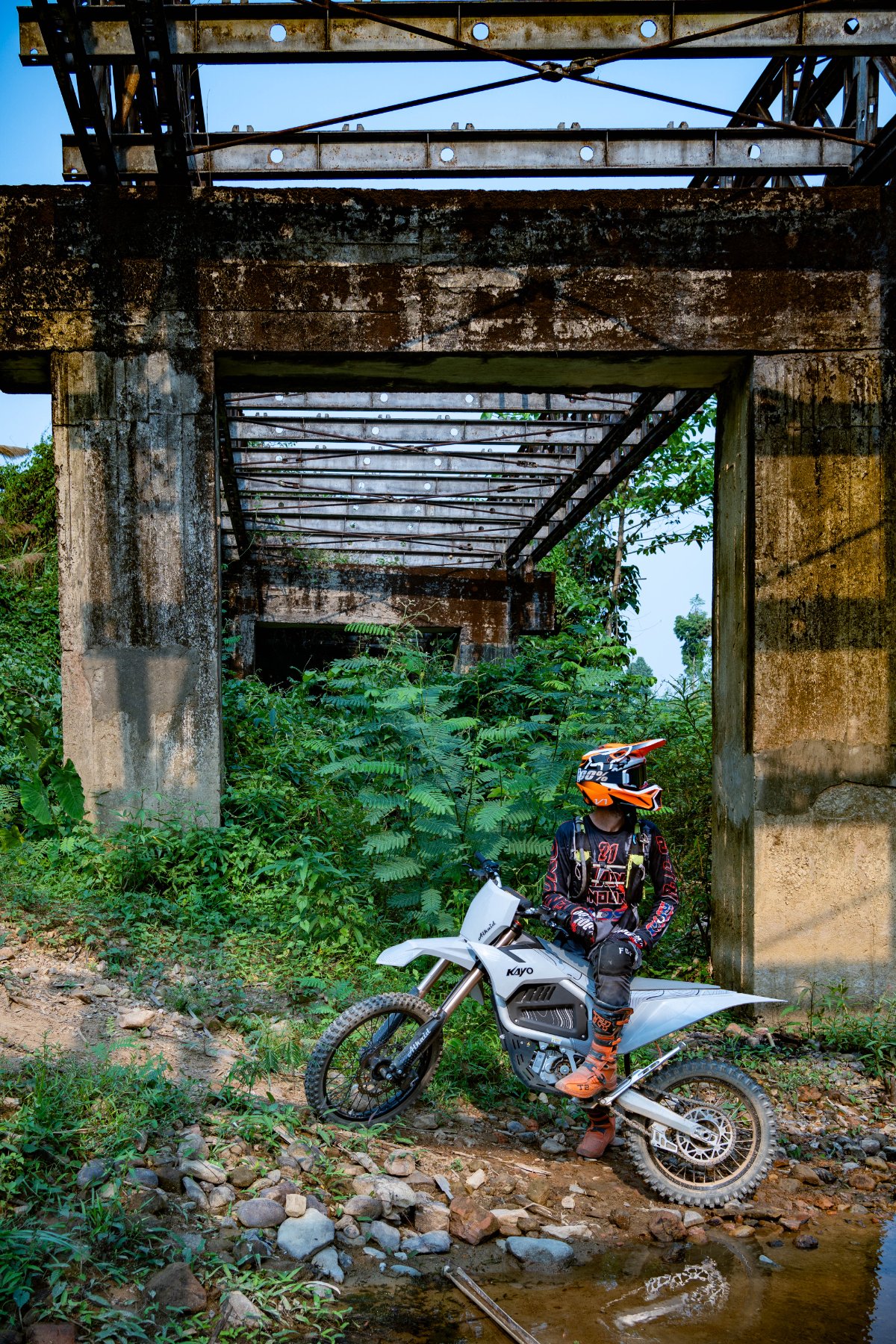
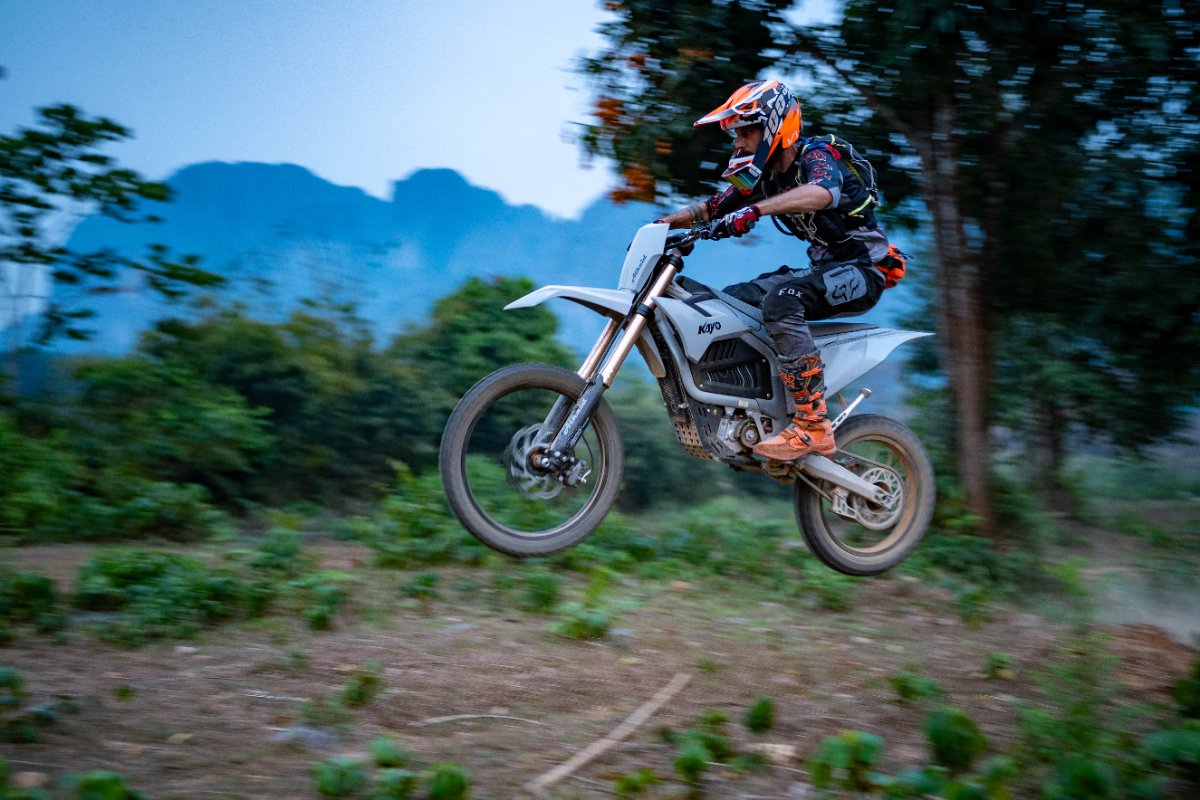
An electric enduro bike has the same purpose as a gas dirt bike — go fast off-road, climb hills, cross rivers, dance through single-track — but the engine is replaced by a battery and an electric motor. The bike we run, the Kayo EC2i, is a purpose-built off-road platform: real suspension, real tyres, real ground clearance. It is not an e-bicycle and not a road scooter. It is a dirt bike that happens to be electric.
Three things are immediately different the moment you twist the throttle. First: silence. Not "quieter than gas" — almost completely silent, with only a faint motor whir. Second: instant torque. There is no clutch and no power band. From the first millimetre of throttle, the bike pulls. Third: no smell. No exhaust, no fuel sloshing in your gear bag, no oil on your boots.
Why electric wins in Laos specifically
Electric is not automatically better than gas everywhere. In Laos, and especially around Vang Vieng, the geography and culture make it a much stronger fit than in most countries.
1. Silent through villages and farmland
Our half-day route passes through three small Lao villages and a long stretch of working rice paddies. With gas bikes, every visit was a disturbance — engines drowning conversations, chickens scattering, kids covering their ears as we passed. With electric, we slip through. Farmers wave instead of frowning. Water buffalo do not move. The whole trail interaction shifts from "the loud tourists are passing again" to "look, riders are coming".
This is not a gimmick. It is the single biggest reason our village partners — homestay families, the lunch stop on the full-day tour — have welcomed us back when other operators were politely told to go around. Silent matters in rural Laos.
2. No motorcycle license requirement
In Vietnam, the Ha Giang loop is famous and most travellers attempt it without a valid motorcycle license. Police checkpoints catch some; most slip through. Insurance does not cover unlicensed riders, which becomes a disaster when an accident happens. In Thailand, Pai and Chiang Mai loops have similar grey-area enforcement.
Our enduro tours run entirely on private off-road trails in Vang Vieng. No public road sections. That means no motorcycle license is required to ride them. We have hosted complete two-wheel beginners on the half-day tour and got them home grinning. Try doing that on a Honda XR with a clutch in Vietnamese traffic.
3. Beginners actually learn
The hardest part of riding a gas dirt bike is the clutch. New riders stall it on hills, dump it on slow technical sections, panic and let it out too fast on river crossings. Our older fleet was 50% beginner-failures on day one.
Electric bikes have no clutch. The motor delivers smooth torque from zero RPM. New riders pick it up in five minutes. We can hand a Kayo EC2i to someone who has never thrown a leg over a motorbike, brief them for fifteen minutes, and have them confidently riding rice-paddy berms within an hour. It changes who can come on tour with us.
4. Better wildlife encounters
Vang Vieng is karst country — limestone towers, hidden valleys, dense forest pockets between the rice fields. Wildlife lives in those pockets: birds, monkeys, sometimes wild boar tracks. Gas bikes scare everything away long before you arrive. Silent bikes do not. We routinely roll up on troops of monkeys, hornbills sitting on a branch, and once a clouded leopard track in dust we would never have noticed if the engine noise had drowned out our guide.
5. Eco-friendly tourism, with no asterisk
Zero direct emissions. No oil leaks on the trail. No fuel spills at refuel stops because there are no refuel stops — we charge the bikes overnight from our office. Even accounting for grid electricity (Laos generates most of its power from hydroelectric dams on the Mekong), the carbon footprint per tour is a fraction of a comparable gas operation.
What about range, charging, and power?
These are the three concerns every customer asks about. Honest answers below.
Range
The Kayo EC2i has enough range for a full-day tour on aggressive trails. Our half-day tour uses about 35–45% of a full charge depending on rider weight and how technical the route gets. Our full-day tour with a lunch break uses 70–85%. We have never run a bike out of charge on tour. We do swap to a backup bike at lunch on the full-day tour if a particularly heavy rider has been riding hard, just for safety margin.
Charging
Every bike charges overnight at our office in Vang Vieng. By the time guests arrive at 8 AM, every bike is at 100%. We charge in parallel — no waiting. If a tour somehow needed a daytime top-up, we have a portable charger that does an 80% top-up in under an hour at lunch. In practice we have never used it.
Power and torque
This is the part experienced gas riders worry about most. The honest answer: the EC2i has more usable torque than a 250cc gas dirt bike at low speed. On steep technical climbs where you would be slipping the clutch on a gas bike, you just hold the throttle steady and the motor pulls you over. Top speed is lower than a 450cc — but on Vang Vieng trails, top speed is irrelevant. Trail speed and slow-speed precision are what matter, and electric is genuinely better at both.
Where electric is not (yet) the right answer
We are not anti-gas-bike fundamentalists. There are still places where gas wins:
- Multi-day expeditions deep into roadless areas with no overnight power.
- Endurance racing where you need to swap fuel in 60 seconds.
- Backcountry trips longer than ~7 hours of aggressive riding without a charge stop.
- Anywhere the local riding culture is so tied to the sound of a gas engine that silent bikes feel like cheating (some sport contexts).
For our use case — guided day tours from a fixed Vang Vieng base, with overnight charging — none of those constraints apply. Electric is straight-up better.
Vang Vieng vs Vietnam vs Thailand
We get the comparison question constantly. Here is the short version:
- Vang Vieng (electric, with us): Real off-road trails, silent bikes, no license needed, beginners welcome, full gear and hotel pickup included. Half-day $100, full-day $150. We are the only operator running this format in Laos.
- Ha Giang, Vietnam: Famous loop, mostly road touring on tarmac, gas bikes only. Most travellers ride without a valid license, which is risky. Beautiful scenery, but it is a road trip with bikes — not off-road enduro.
- Pai or Chiang Mai, Thailand: Easier to get bikes, mostly paved loops. International driving permit required. Less off-road than Laos for the same money. Better food.
If you want a relaxed scenic motorbike road trip, Vietnam or Thailand. If you want real off-road riding without paperwork on bikes that beginners can actually handle — and you want to do it in the most dramatic karst landscape in Southeast Asia — Vang Vieng with us.
Try it yourself
Two ways to ride with us:
- Half-day tour, $100 USD — about 3-4 hours, beginner-friendly, rice fields and small villages, hotel pickup, all gear included.
- Full-day tour, $150 USD — about 7 hours, mix of easy and technical, lunch in a Lao village, deeper into the karst country.
See the full electric enduro overview at our electric enduro Vang Vieng landing page, or contact us on WhatsApp at +856 20 93 124 728 to book.
FAQ
Are electric enduro bikes really powerful enough for off-road?
Yes. The Kayo EC2i has more usable low-speed torque than a 250cc gas dirt bike — better for steep technical climbs and slow-speed precision. Top speed is lower than a 450cc but on Vang Vieng trails top speed does not matter.
What is the range on a single charge?
Enough for a full-day tour on aggressive trails. Half-day tours use 35–45% of a charge; full-day tours use 70–85%. We charge overnight; bikes are always at 100% in the morning.
Do I need a motorcycle license?
No. Our tours run entirely on private off-road trails, so a license is not required. International driving permits are not needed either.
Are these tours suitable for total beginners?
Yes — especially the half-day. Electric bikes are easier to learn than gas because there is no clutch. Most beginners are confidently riding within the first hour.
What is included?
Kayo EC2i electric enduro bike (fully charged), helmet, gloves, knee/elbow pads, body armor, local English-speaking guide, water and snacks, free hotel pickup in Vang Vieng, and ride photos. Full-day tours add lunch in a Lao village.